
In recent years, hotel and holiday home operators have embraced the evolution of self check-in as an increasingly convenient and popular solution for guests. This self check-in mode allows hosts to offer a positive experience to their guests, allowing them to arrive and access the facilities at any time, regardless of reception opening hours or staff presence. However, self check-in also offers significant benefits to hosts, including reducing operating costs: without the need to have staff present at reception to greet guests, staff costs can be saved and resources can be allocated to other key areas of the business.
One of the most common options to support self check-in is the use of traditional lockboxes or keyboxes.
What are lockboxes or keyboxes?
Lockboxes or keyboxes are security devices used to store keys in a secure and accessible manner. Often, they are used in the context of hotels, holiday homes, B&Bs for self check-in, allowing guests to access their keys independently without the need to interact directly with hotel staff.
Keyboxes are usually installed outside the property, in a spot easily accessible and identifiable by guests. The device consists of a sturdy container that can be fixed to a wall and tied with a ring to the door handle or a railing. Inside the lockbox or keybox, the key to the room or flat is placed.
To gain possession of the key, guests must enter a specific numeric or alphanumeric code or combination. Once the correct code is entered, the lockbox unlocks and allows the guest to take out the key. This system offers the possibility of being able to enter rooms and thus gain access to the facility at any time, even outside reception opening hours. Hotel keyboxes offer several advantages for both guests and hosts.
For guests, they provide a convenient and autonomous way to access the accommodation without depending on reception opening hours or the presence of staff. This is especially useful for those arriving late or at unconventional times. In addition, they eliminate the need to carry a key during daily activities, reducing the risk of loss. For hosts, lockboxes offer greater flexibility and convenience.
They can facilitate the management of arrivals and departures, reducing time and the need for personal interaction, and also help to ensure the security of keys, preventing them from being lost or stolen. These devices are often made of durable materials and equipped with advanced security mechanisms to protect keys. However, it is important to carefully consider choosing the right lockbox.
Security is crucial, so it is advisable to opt for high-quality and durable devices that offer protection against physical attacks or break-in attempts. It is also important to choose a lockbox or keybox that blends well with the aesthetics of the building or structure.

What are the components of a keybox for hotel and b&B
Although designs may vary slightly, most key safes consist of the following components:
Storage compartment: this is the area where keys or cards are stored to access the facility or rooms. The size of the storage compartment varies depending on the lockbox model and can hold several keys or just one, as required.
Locking mechanism: the locking mechanism is the heart of the lockbox. It ensures that only authorised users can access the stored keys. Locking mechanisms can be mechanical (such as combination locks or key locks) or electronic (such as keypad locks or smart locks using Bluetooth or Wi-Fi connectivity).
Outer casing: the outer casing protects the internal components of the key box from the weather and tampering. The materials used for the casing can range from metal to plastic, with varying levels of durability and weather resistance.
How many lockbox models exist
Various lockbox models are commercially available, offering various locking options.
One of the most common models is the push-button lockbox. This type of lockbox allows users to set a combination that can be entered in any order. Users can customise the access code according to their preferences, making it easier to remember. However, push-button models may present a risk: if the access code is predictable or easy to guess, it may be more vulnerable to external attacks. Therefore, it is advisable to choose unique and hard-to-guess combinations.
Another type of lockbox is the wheeled model. These locks have four sliding wheels with numbers or letters to form a combination, similar to those used on suitcases. This type of lock offers a greater variety of possible combinations and can be considered more secure than button models. However, even wheel locks may be subject to a risk of forcing if an expert manages to tinker under the gears with a small piece of metal. Therefore, it is important to pay attention to the construction quality of the lockbox to ensure an adequate level of security.
Finally, there are the dial models, which resemble traditional padlocks. These combination padlocks have a rotating dial for entering the numeric combination. This type is one of the most recognisable to those accustomed to traditional padlocks, but it is important to note that security depends on the quality and strength of the padlock itself.
Dial models, although they may be less easy to open, may take longer to set the correct combination. On the other hand, push-button models are easier to programme, but may be more vulnerable to external attacks. Roller models can offer a good combination of security and ease of use, provided they are made of durable materials and have a good locking mechanism.
Therefore, the choice of lockbox model depends on the user’s personal preferences and specific security needs. It is advisable to carefully evaluate the different models available, taking into account the factors of security, ease of use and construction quality, as well as assessing the location where one intends to install them.
How secure is a lockbox
Although lockboxes are generally safe, it is advisable to take certain precautions to reduce potential risks. One of the main tips is to change the security code frequently, ideally after the departure of each guest. In addition, it is advisable to keep the lockbox inside the building, especially if you live in an apartment block or apartment complex, so that it is not accessible from the landing.
On the other hand, if you live in an urban area with a lot of pedestrian or car traffic, discretion is not a major concern, as a good combination lockbox requires a lot of effort to force, but caution is never too much.
If you prefer a much safer solution, find out more about Vikey self check in.
How to install lockboxes?
Installing lockboxes is a fairly simple practice; you can install them using screws or a metal ring around a door or railing. It is also possible to install the lockbox on a wall, usually next to the door exhibits, but logically it will require more time and equipment, such as a drill or electric screwdriver, it is generally considered safer than putting it around the door handle like a padlock. The metal rings used to install lockboxes are usually weaker and easier to break.
However, it is important to consider the risks associated with both installation options. Wall lockbox installation may require more time and effort, but it offers greater security and strength. On the other hand, the use of a metal ring may be simpler and faster, but it presents the risk of being more vulnerable to attack and breakage.
What to pay attention to when installing a lockbox
When deciding to install a lockbox, it is important to take into account the weather conditions and any complications that could affect the opening of the lockbox. Difficult weather conditions such as extreme cold, snow or rain can block or freeze the lockbox, preventing it from opening. To avoid this problem, it is advisable to purchase a cover to protect the lockbox opening flap.
Another common problem is the accidental closing of the lockbox by guests. To avoid such situations, it is advisable to provide clear and detailed instructions on the use of the lockbox, specifically indicating how to use the device correctly. Furthermore, if accidental locking becomes a recurring problem, it may be worth investing in a lockbox that does not lock without the use of a key or consider leaving a backup or emergency key with a trusted neighbour.
The best alternatives to a locked key box outside, self check in with Vikey
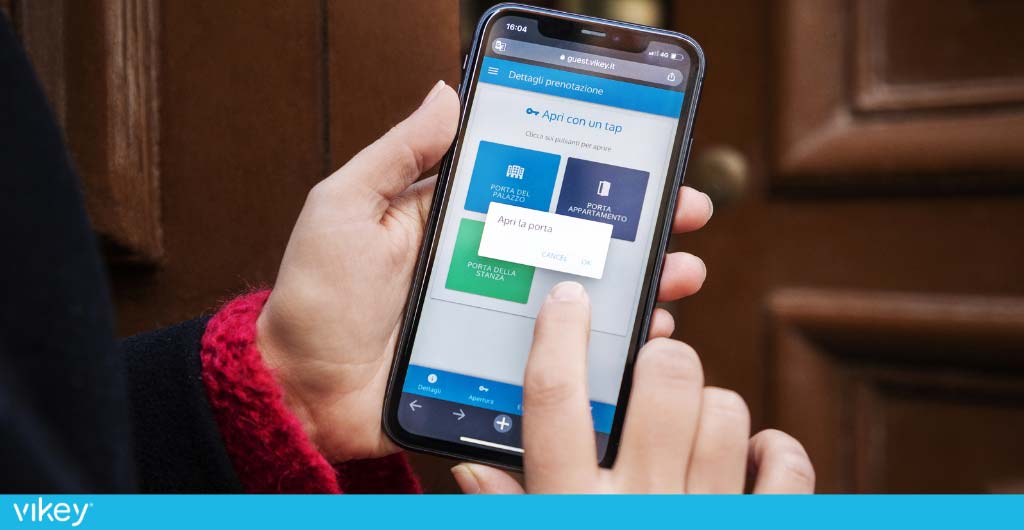
Although lockboxes can be convenient for automating the self check-in process, and for making it easier for guests to access their keys, there are modern alternatives that offer more advanced security and convenience features. One example of these alternatives is secure, cloud-based access control systems, such as the system offered by Vikey. This innovative solution leverages digital technology and cloud connectivity to provide a more efficient and effective method for self check-in and access management.
Vikey offers an innovative and comprehensive solution for self check-in without the use of traditional key boxes. Their product range includes the Vikey Smart Lock 2.0, the Vikey Smart Lock, the Vikey Smart Handle and the Vikey Electric Encounter.
The Vikey Smart Lock 2.0 is an advanced solution that replaces the European cylinder of the existing lock. It offers motorised locking and opening with mandrels, powered by a rechargeable battery. This model is also compatible with armoured doors and has the advantage that the lock is not visible from the outside. Installation of the Vikey Smart Lock 2.0 is easy and reversible. In addition, it offers the ability to open the door even without an internet connection and remotely, providing a secure and convenient self check-in experience.
The Vikey Smart Lock is an equally effective alternative that replaces the European cylinder. It offers a deadbolt lock and is powered by batteries. It is also compatible with armoured doors and features easy, reversible installation. Like the 2.0 model, the Vikey Smart Lock allows opening without an internet connection and remotely, offering greater flexibility to hosts and guests.
The Vikey Smart Handle is an innovative solution that directly replaces the door handle. It offers a battery-powered, deadbolt lock. This model is compatible with room doors and features simple, reversible installation. The Vikey Smart Handle also offers the ability to open the door without an internet connection and remotely, making self check-in a more convenient and secure experience for guests.
Finally, Vikey offers the Vikey electric strike, which is compatible with all existing locks. This solution does not remove the original key, but electrifies the door, offering smart and remote opening. It is also compatible with armoured doors and features a lock that is not visible from the outside, ensuring maximum security.
Installation of Vikey products is quick and easy. Smart Locks replace the existing European cylinder, taking only ten minutes to install. No permanent changes are required to the door, so the European cylinder can be remounted if needed. If your door does not have a European cylinder or you prefer not to replace it, Vikey offers the option of an electric strike, which electrifies the door without removing the original key.
Vikey represents the complete and innovative solution for self check-in without the use of traditional key boxes. With their advanced product range, Vikey offers hosts the opportunity to automate and secure access to their facilities. Vikey’s products are easy to install, reliable and offer features such as remote and internet-less opening, providing a better self check-in experience for guests and greater peace of mind for hosts. Thanks to Vikey, self check-in becomes more convenient, secure and efficient.